Travel Expense Report: Simplifying Business Travel Documentation
Travel Expense Reports are essential tools for both employees and employers. They provide a clear, organized way to document and submit expenses incurred during business travel. This article will guide you through the importance of using a Travel Expense Report, common pitfalls, and how to avoid them.
Why Use a Travel Expense Report?
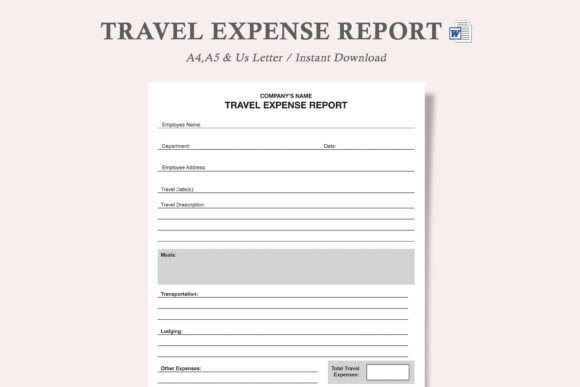
A well-structured Travel Expense Report not only helps in keeping track of all your expenditures but also ensures that you have a professional and standardized format for submission. This is particularly useful for one-time business events where detailed documentation is required. The report typically includes sections for different types of expenses, such as transportation, lodging, meals, and incidentals, along with an area for a supervisor's signature.
Mistake 1: Not Keeping Detailed Receipts
One of the most common mistakes is failing to keep detailed receipts for every expense. Without proper documentation, it can be challenging to justify or verify the expenses, leading to delays in reimbursement and potential disputes.
Better Approach: Always keep all receipts, even for small purchases. Scan or photograph them and store them digitally. This way, you have a backup and can easily attach them to your Travel Expense Report.
Mistake 2: Failing to Categorize Expenses Properly
Another frequent issue is not categorizing expenses correctly. Mixing up categories like transportation and meals can lead to confusion and may result in the rejection of your claim.
Better Approach: Familiarize yourself with the specific categories used by your organization. Carefully categorize each expense and ensure that they align with the company's guidelines.
Mistake 3: Submitting Incomplete or Incorrect Information
Submitting a Travel Expense Report with incomplete or incorrect information can delay the reimbursement process and may require additional clarification, which can be time-consuming.
Better Approach: Double-check all entries before submitting. Ensure that all fields are filled out accurately and that the total amounts match the sum of individual expenses. It’s also a good idea to have a colleague review the report before submission.
What to Check Before Using a Travel Expense Report
- Format Compatibility: Make sure the Travel Expense Report format is compatible with your organization's requirements. Common formats include PDF, JPEG, and MS Word, and sizes like US Letter, A4, and A5.
- Editable Fields: Verify that the form is editable and can be filled out digitally. This saves time and reduces the risk of errors from manual entry.
- Ink-Friendly Design: Choose a design that is professional and ink-friendly. This ensures that the printed version looks clean and professional, making it easier to read and present.
How to Use the Travel Expense Report
- Purchase the Listing: Obtain the Travel Expense Report from a reputable source. This listing includes 3 PDF, 3 JPEG, and 3 MS Word versions in US Letter, A4, and A5 sizes.
- Download and Save: Download the files and save them to your computer. This ensures you always have access to the forms when needed.
- Print at Home or Local Print Shop: Print the forms at home or at a local print shop like FedEx Kinkos, Office Depot, or Staples. High-quality printing is important for a professional presentation.
- Fill It In: Fill in the form with all necessary details, including dates, amounts, and descriptions of each expense. Attach any relevant receipts and obtain the required signatures.
By following these guidelines, you can effectively use a Travel Expense Report to document and submit your business travel expenses. This not only streamlines the reimbursement process but also helps maintain a professional and organized approach to your financial reporting.