Understanding and Utilizing Daycare Injury Reports: A Comprehensive Guide
Introduction to Daycare Injury Reports
Daycare injury reports are essential documents that help caregivers, parents, and administrators track and manage incidents involving children. These reports play a crucial role in maintaining the safety and well-being of children in daycare settings. Whether you run a home daycare, independent daycare, summer camp, or small business, having a professional and efficient system for reporting injuries is vital.
The Purpose and Significance of Daycare Injury Reports
Purpose: The primary purpose of a daycare injury report is to document any incident that results in an injury to a child. This documentation helps in several ways:
- Providing a clear and detailed account of what happened.
- Ensuring proper medical attention is given if needed.
- Maintaining a record for future reference and legal purposes.
- Helping to identify and address potential safety hazards.
Significance: Daycare injury reports are not just a formality; they are a critical part of ensuring the safety and well-being of children. They help in maintaining transparency and trust between caregivers and parents, and they can be used to improve safety protocols and training.
Components of a Daycare Injury Report
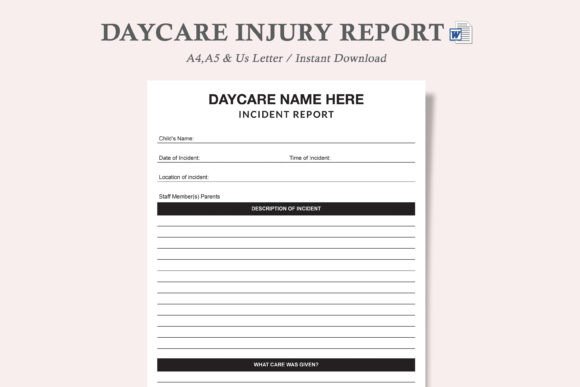
A typical daycare injury report includes several key components:
- Date and Time of Incident: When the injury occurred.
- Name of Child and Caregiver: Identifying the individuals involved.
- Description of the Incident: A detailed account of what happened.
- Injury Details: Specifics about the nature and extent of the injury.
- Treatment Provided: Immediate actions taken to address the injury.
- Follow-Up Actions: Steps taken after the initial treatment, such as contacting parents or seeking further medical attention.
How to Use a Daycare Injury Report Form
Using a daycare injury report form effectively involves a few simple steps:
- Purchase the Form: Obtain a high-quality, professional daycare injury report form. This can be in PDF, JPEG, or MS Word formats, depending on your preference.
- Download and Save: Once purchased, download the file and save it to your computer for easy access.
- Print the Form: Print the form at home or at a local print shop. Ensure you have enough copies for regular use.
- Fill It In: Whenever an incident occurs, fill out the form with all the necessary details. Be thorough and accurate to ensure the best possible care and documentation.
Features of a Professional Daycare Injury Report Form
A well-designed daycare injury report form should include the following features:
- Professional and Minimalist Design: Clean and easy to read, making it user-friendly for both caregivers and parents.
- Ink-Friendly: Designed to be printed efficiently, reducing ink usage and costs.
- Digital Editable PDF: Allows for easy customization and editing, making it convenient to update and print as needed.
- Multiple Sizes Available: Comes in US Letter, A4, and A5 sizes to fit various printing needs.
Common Misunderstandings and Clarifications
There are a few common misunderstandings about daycare injury reports that are important to clarify:
- Not Just for Major Injuries: While serious injuries require immediate attention, minor bumps and bruises should also be documented. This helps in tracking patterns and improving overall safety.
- Legal Protection: Properly documenting injuries can provide legal protection for both the daycare and the parents. It ensures that all parties are aware of and agree on the details of the incident.
- Continuous Improvement: Regularly reviewing and analyzing injury reports can help in identifying and addressing potential safety issues, leading to a safer environment for children.
Conclusion
Daycare injury reports are an essential tool for maintaining the safety and well-being of children in daycare settings. By using a professional and well-structured injury report form, caregivers can ensure that all incidents are properly documented, managed, and communicated. This not only helps in providing the best care for children but also in building trust and transparency with parents. Remember, the goal is to create a safe and nurturing environment where children can thrive.